

Five Natural Spaces to Explore on the North Fork by Group for the East End
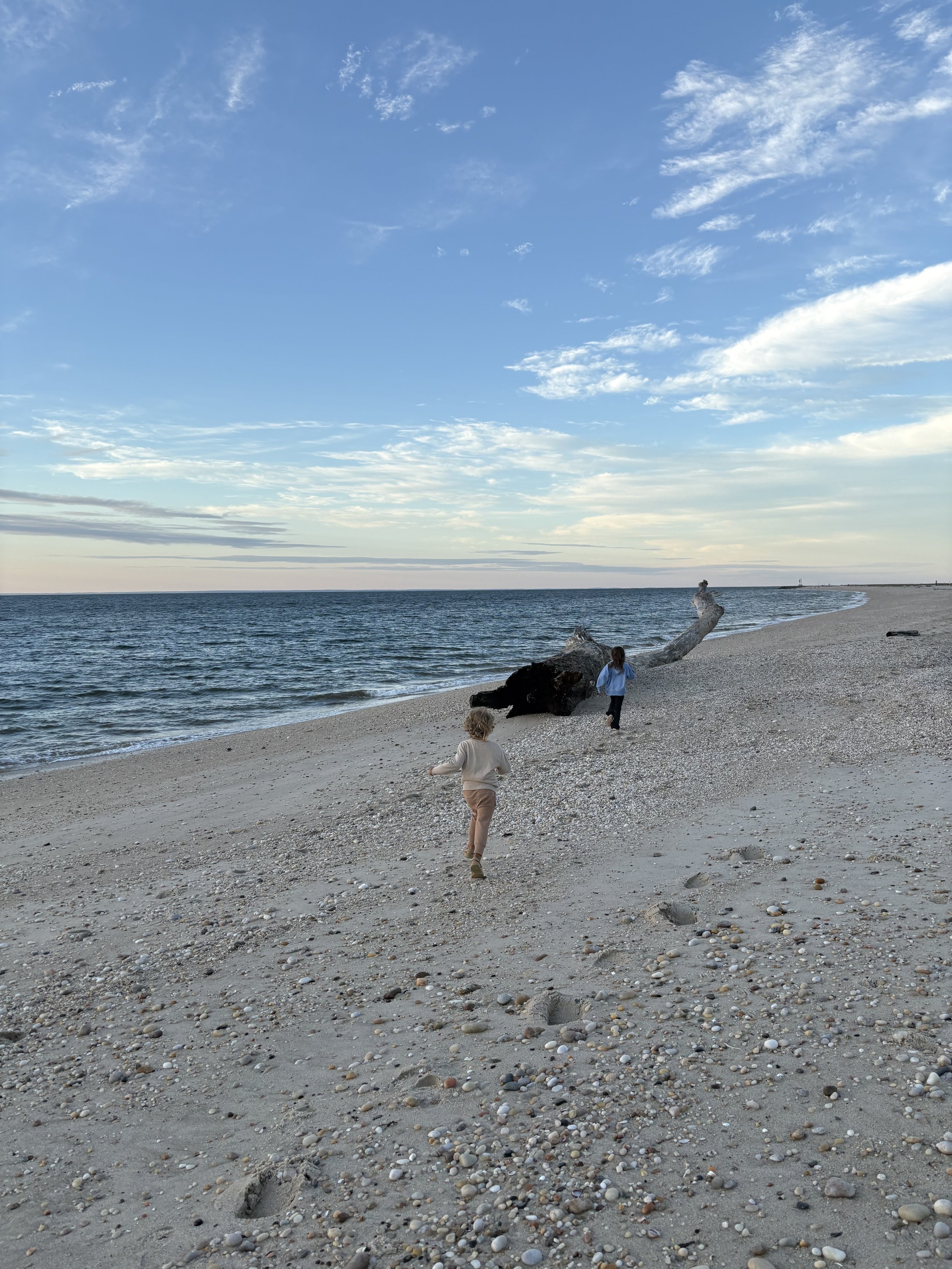
The North Fork reawakens in spring as native plants bloom, migratory birds return, and wildlife, like us, start to prepare for the warmer months ahead. It’s an extraordinary time of transformation, and provides a unique opportunity for families to experience how our natural spaces evolve through the seasons. Here’s what you can discover at five North Fork preserves and beaches right now by Group for the East End.
Downs Farm Preserve
This historically and culturally significant preserve in Cutchogue was once a 17th-century Native American settlement. Take a moment to visit the Fort Corchaug historic marker. You’ll also notice a large symbolic nest that honors bald eagles and ospreys, which you may be lucky enough to see flying overhead. Along the one-mile hiking loop, you can walk across the footbridge to a secret hideaway to get a glimpse of Downs Creek, which is home to fish, birds, muskrats, and more. The trail becomes sandier as you go, and you can get a better look at the salt marsh and look for osprey. After you exit, look for the native plant meadow the Group installed in 2023. The meadow has been designated as a Monarch Waystation, an important native habitat for the monarch butterfly. PS, you can join Group for the East End for nature outings at Downs Farm Preserve year-round!
Ask: What was the most surprising thing you saw on the trail?
Sense: Explore the preserve again and again to see how it changes throughout the spring and early summer.
Arshamomaque Preserve
Get ready for a nature adventure at this ever-changing Greenport preserve that is part of the Bay to Sound Trail Project. Spring is the perfect time to see vernal pools. These seasonal wetlands are important breeding grounds for reptiles and amphibians and a water source for woodland creatures. But hurry! Come summer, vernal pools dry up until rainfall, and snowmelt fills them again in winter. You can also climb the observation tower and look for ospreys, kingfishers, great blue herons, and other birds flying across the preserve.
Ask: Did you find the vernal pool interpretive sign? What was your favorite fact?
Sense: If you’re quiet and still, you just may hear a spring peeper. What other sounds of wildlife can you hear?
Pipes Cove Preserve
Another Bay to Sound trail in Greenport, Pipes Cove Preserve, is where the land meets the sea. As you enter the preserve, you’ll notice what looks like a small house high up on a pole. Who lives there? The purple martin! These migratory birds live together in organized colonies, making these types of birdhouses the perfect habitat for them. Look for interpretive signs to learn about river otters.
Ask: Why do you think some birds live in colonies?
Sense: Visit the observation tower and look out over Pipes Cove. Can you see Shelter Island? What else do you notice?
South Harbor Beach
Tucked away in Southold, this quiet beach is adjacent to an inlet flush with wildlife. You can find fiddler crabs, hermit crabs, and mud snails. Watch how they move and notice their differences. Look for the osprey nest that already has two birds! Imagine the work that goes into building it. Is there anything that looks peculiar? Ospreys will use just about anything to build a nest, including trash. Help keep them safe by doing your own beach cleanup.
Ask: Why do you think crabs need pinchy claws? Can you walk like a crab? Was it easy or a little challenging?
Sense: Feel the different shells and how each has its own unique texture.
Breakwater Beach
Explore another side of the North Fork at this Long Island Sound beach in Mattituck. The wrack line — where seaweed, shells, driftwood, and more wash up at high tide — is perfect for beachcombing. You can find shells, whelk egg casings — which are also called a mermaid’s necklace, spider crab shells, and more. In the coming weeks, you’ll notice symbolic string fencing is being put up to help protect nesting piping plovers and terns. In late spring, you can find Group for the East End talking about how to Be a Good Egg and protect shorebirds. Stop by and say hello!
Ask: Why do you think shorebirds need protection? How can you help?
Sense: Smell the salty air and notice how it gets stronger in the wind.
Through environmental education programs in schools, nature outings, and volunteer events, Group for the East End inspires children and adults to appreciate, respect, and protect all things natural on the East End. All year, Group for the East End leads family-friendly nature outings across the East End. Find upcoming events atthegroup.org./nature-outings.